As the February half-term approaches, the UK’s youth organization sector enters a critical phase of intensive training. During this window, Scout and Girlguiding groups typically complete outdoor badge assessments and team competency evaluations, translating the theoretical knowledge gained during the school term into practical performance in real-world settings.
Against this backdrop, PGL’s “Scout & Girlguiding Takeover Weekends” offer a tailored solution that perfectly aligns with the needs of these organizations. Far from being a standard camp activity, these are “structured outdoor training weekends” designed specifically around badge requirements.
February Half-Term: Badge Training Enters the “Field Validation Phase”
For Scout and Girlguiding groups, the February half-term serves essentially as a “competency validation cycle.” While the children have already mastered the fundamentals during the term, badge certification requires them to demonstrate their skills in a real-world environment.
The challenge lies in the fact that such validation is not merely a test of isolated skills, but a multi-dimensional assessment of comprehensive capabilities—including teamwork, outdoor survival skills, basic safety awareness, and emergency response.
PGL addresses this by breaking these competencies down into a continuous chain of tasks completed progressively within authentic outdoor settings. This allows badge assessment to be naturally integrated into the activity flow, rather than being conducted as a separate, exam-style event.
The Girlguiding/Scout Takeover Model: An Immersive, Organization-Exclusive Training Environment
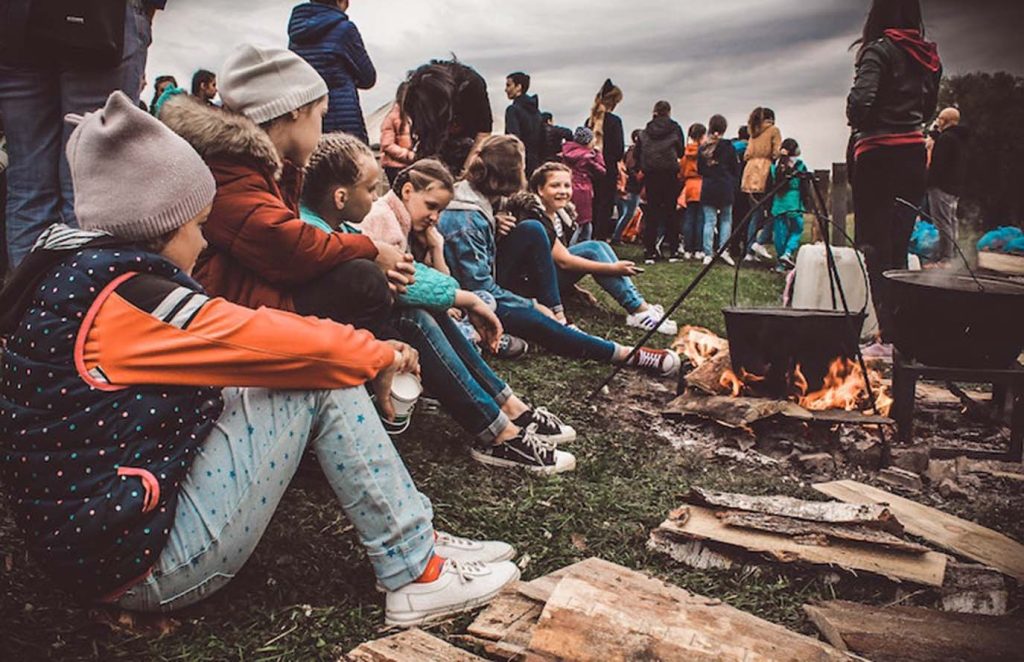
The defining feature of these “Takeover Weekends” is that the camp is reserved exclusively for the organization. Throughout the weekend, the site serves only the Girlguiding or Scout group, without sharing facilities with schools or family groups.
This environment ensures a high level of consistency in the training atmosphere. From the moment they arrive, the children are immersed in a unified task structure and team discipline framework; this minimizes external distractions, allowing them to focus entirely on executing tasks and collaborating as a team.
In PGL’s operational model, this exclusive environment also enables the instructor team to provide guidance based on standardized badge criteria, ensuring that the pace of training and the assessment standards remain perfectly aligned.
Tailored Outdoor Skills Experiences: From “Tasks” to “Real-World Scenarios”
The core of the “Takeover Weekends” lies in the highly contextualized design of the outdoor skills curriculum; these are not merely isolated activities, but chains of continuous, interconnected tasks.
During wilderness navigation training, children do more than just learn to use maps and compasses; they are assigned real-world route tasks requiring route planning, terrain assessment, and the delegation of roles within a set timeframe. Tasks often incorporate “information dispersion mechanisms”—where different members hold different clues—to strengthen communication and information synthesis skills.
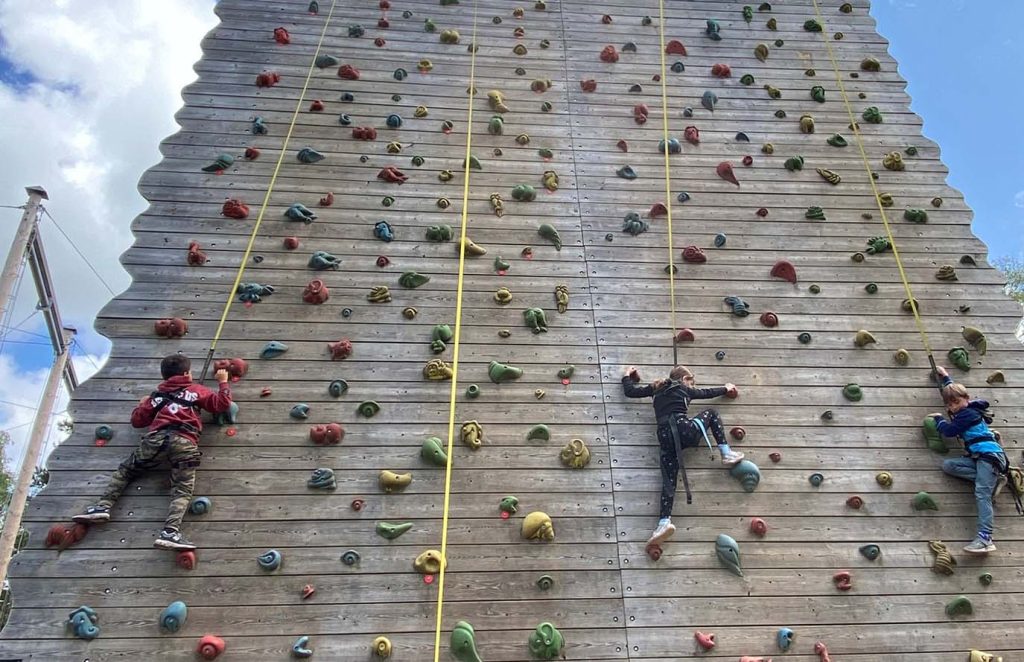
In the ropes and structural construction module, teams must build temporary structures in an outdoor setting, such as simple shelters or obstacle-crossing aids. This process involves not only knot-tying techniques but also considerations of stability, load-bearing safety, and team coordination. It often entails a cycle of “design adjustment—on-site reconstruction—further optimization,” allowing children to truly grasp engineering logic and the dynamics of collaboration.
Hands-on first aid training is designed around situational simulations, such as “teammate injury,” “rescue of a lost person,” or “sudden weather changes.” Participants must make judgments, delegate tasks, and perform basic first aid under pressure. Such training reinforces psychological resilience and a sense of responsibility, going far beyond the mere memorization of skills.
Additionally, the program incorporates orienteering challenges and night navigation tasks that require route identification in low-light or complex environments. These tasks demand higher levels of team communication and rapid decision-making, aligning closely with the advanced competency assessments found in the badge system.
Flexible Structure for 10–60 Participants: Tiered Tasks and Real-World Team Operation Simulations
PGL offers a highly flexible grouping system for program execution, allowing teams of 10 to 60 participants to be organized into multiple tiers based on age, experience, and ability.
During actual training, different groups may simultaneously undertake tasks of varying difficulty—such as basic navigation, advanced rope work, or comprehensive challenges—yet all tasks ultimately feed into a unified badge-based competency framework.
Each group is assigned a dedicated leader and provided with a customized task manual. This manual outlines not only task objectives but also provides phased hints, risk warnings, and assessment criteria, transforming the experience into a “task execution system” rather than a traditional activity guide. The team leaders also conduct debriefing sessions at key milestones, guiding the children to review their decision-making processes—such as “Why was this route chosen?”, “Was team communication effective?”, and “Were risks assessed in a timely manner?”—thereby strengthening their capacity for reflection.
Long-term Group Systems: From One-off Camps to Annual Training Pathways
For Girlguiding and Scout units, “Takeover Weekends” are not merely one-off events but structural components that can be integrated into annual training programs.
PGL’s long-term partnership model allows groups to make multiple bookings throughout the year, gradually establishing a stable training cycle. As the partnership deepens, support extends to include the use of meeting rooms, assistance with annual planning, and the optimization of customized curricula, transforming training from a simple “event schedule” into a “continuous capability development system.”
PGL Group Portal: The Starting Point for Structured Customization
PGL offers a dedicated booking and customization portal specifically for Girlguiding and Scout groups: the “PGL Scout & Girlguiding Groups” portal.
Groups can submit details regarding group size, age distribution, and badge objectives. The system automatically matches these inputs with appropriate program combinations and facilitates detailed coordination with the camp team, making the entire planning process more standardized and efficient.
Group Outdoor Training is Evolving from Events to Systems
As Girlguiding and Scout organizations continue to emphasize competency assessment standards, outdoor training is shifting from mere “event organization” to “structured capability-building modules.”
PGL’s “Takeover Weekends” represent a standardized solution born of this trend. Centered on badge systems, structured around task-based challenges, and set within immersive outdoor environments, they imbue youth group training with greater continuity, evaluability, and systematic coherence.
During the critical February half-term window, these deeply customized outdoor skill experiences have become an indispensable part of the groups’ annual training programs.