
When sending a child to a residential summer camp for the first time, many parents feel anxious not about any single specific issue, but rather about a general sense of uncertainty: How will my child spend their day? Are they safe at night? Will they get used to the food? What happens if they have an emotional breakdown? This anxiety often intensifies when parents begin planning summer camp sessions—particularly after the Easter break.
Within PGL’s residential camp system, these issues are not left to individual instructors to handle on the fly; instead, they are managed through a well-structured, reliable operational framework.
1.Homesickness and Emotional Adjustment: Not Just “Comfort,” but “Structural Support”
Homesickness is an almost inevitable phase, but within the PGL camp system, it does not escalate into a point of emotional crisis.
In PGL’s daily operations, children are engaged in a continuous structure of activities from morning to night: assemblies, group tasks, outdoor projects, team games, and evening interactions follow one another seamlessly. The key to this design is not simply “keeping children busy,” but avoiding long periods of idle time.
In reality, feelings of homesickness rarely spiral out of control; instead, they are diffused across various activities. Group leaders provide supportive companionship based on the situation but avoid isolating the child for too long, as doing so could actually reinforce those negative emotions.
The “first night”—often the source of greatest parental anxiety—usually sees a significant improvement by the next morning, as children have already settled into the rhythm of their groups.
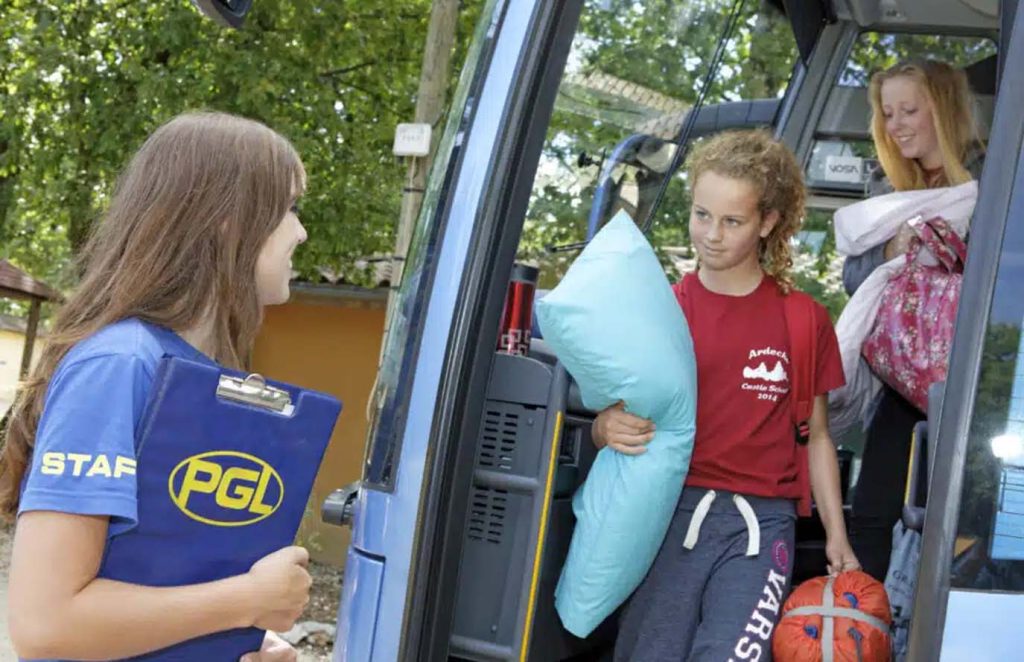
2.Nighttime Safety System: Unseen, Yet Always Active
Nighttime is often when parents feel most anxious, yet in practice, this period is managed through a highly structured system.
Under PGL’s accommodation arrangements, children typically stay in fixed groups, each with dedicated staff members responsible for them, rather than being mixed randomly or supervised by ad-hoc staff.
After lights-out, the camp does not simply go unsupervised; a continuous patrol mechanism remains in place. The focus is not on frequent intervention, but on a “constant presence”—children know staff are nearby, yet their sleep remains undisturbed.
The core benefit of this design is twofold: children do not feel isolated, and parents need not worry about a total lack of supervision.
3. Adapting to Meals and Daily Life: Using “Choice” to Ease the Transition
For many parents sending their children to a residential summer camp for the first time, a common concern is whether the child will struggle to adjust to the food. In reality, however, this aspect often goes much more smoothly than expected; many children settle into a comfortable routine as early as the second day.
PGL’s approach to dining and daily life does not focus on serving a standardized, one-size-fits-all meal; instead, it employs a flexible structure—specifically, a “choice-based mechanism”—to reduce the pressure of adaptation.
Meals typically feature a variety of options rather than a single, fixed menu. A range of staples, side dishes, hot and cold items, and familiar favorites are available simultaneously. Children are not forced to immediately accept a completely alien dining environment; they can begin with familiar choices and gradually experiment with new combinations.
The key to this design is that it avoids forced adaptation, allowing for a natural transition. On the first day, many children prioritize familiar foods—such as simple pasta, potato dishes, or basic meat pairings. By the second day, however, they often begin making “mixed choices,” adding new side dishes to their familiar staples.
By around the third day, the vast majority of children have settled into a stable routine. They stop worrying about what is “safe” to eat and instead develop their own preferred meal combinations. This shift may seem minor, but it is a clear sign that the child has successfully adapted.
Even more importantly, within the PGL system, dining is not an isolated activity but an integral part of the daily schedule. Because the daytime activities are physically demanding, children naturally become more focused on refueling, which further accelerates their adjustment process.
In other words, this adaptation is not achieved through persuasion, but occurs naturally through a combination of continuous activity and an environment that offers choices.
4.The Structure of a Typical Day: Highly Regulated with No Long Gaps
If we break down parental anxiety, it often stems fundamentally from simply not knowing what their child is doing at any given moment. At PGL camps, the daily schedule is highly structured:
Mornings begin with a group wake-up call and a briefing after breakfast; the day includes two or three core activity modules (such as water sports, high ropes courses, or team challenges); midday allows for a quick meal and recovery; the afternoon brings a second round of more challenging activities; evenings are dedicated to group interactions or team games; and lights-out is followed by rest in the dormitories, overseen by staff patrols.
The key takeaway is that children have almost no “long, unstructured gaps” in their time. This design is crucial for emotional stability and helps minimize feelings of loneliness, boredom, or anxiety.
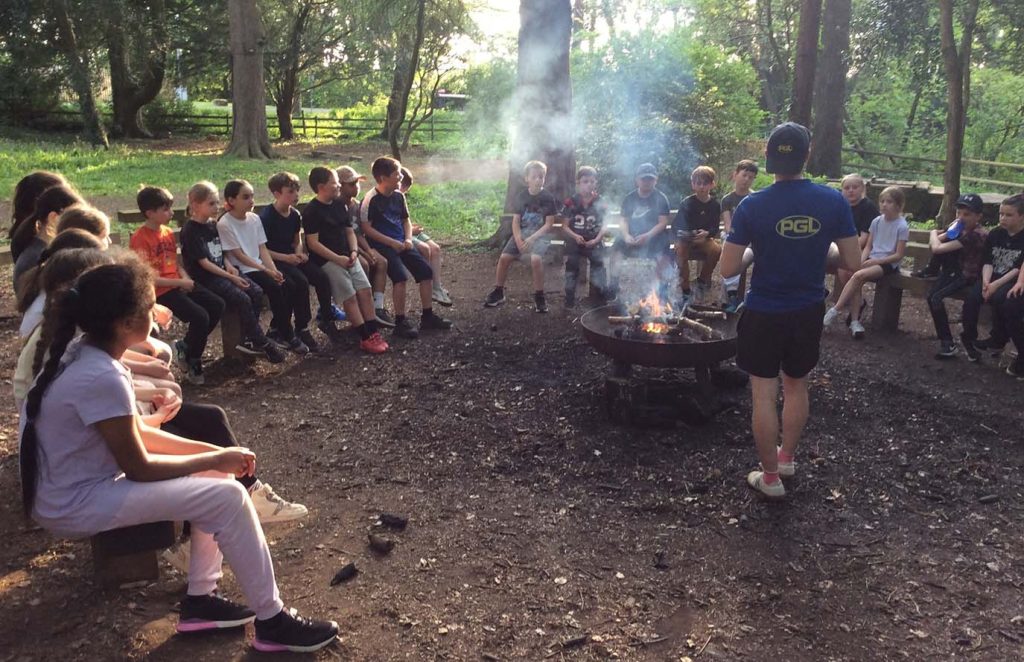
5.Safety and Medical Care: An “Always-On” System, Not Just an Emergency Response
In the context of outdoor residential camps, parents often intuitively view “safety” as a reactive measure—something addressed only after a problem arises. However, in PGL’s operational model, safety functions more like “always-on infrastructure” rather than a process activated only when needed.
PGL camps typically have on-site medical or first-aid personnel present around the clock; they do not simply arrive when summoned but remain on standby within the camp system at all times. Any sign of physical discomfort undergoes an initial on-site assessment—observing the child’s condition and determining whether they need rest, a pause from activities, or further medical support.
A crucial yet often overlooked point is that the first step in the response process is usually “stabilization” rather than “escalation.” In other words, the priority is to ensure the child is safe and stable, rather than immediately taking the most drastic action. This approach avoids over-medicalization and prevents children from becoming anxious over minor issues that might otherwise be blown out of proportion.
The core shift resulting from this structure is that safety is not an isolated event but a continuous state woven into the entire chain of activities. From a parent’s perspective, this is often fully appreciated only after the child returns home: what truly matters is not the absence of risk, but whether that risk is consistently managed within the system.
6.Home-Camp Communication: Transparency Without Disrupting Adaptation
One aspect many parents find difficult to adjust to is the inability to contact their children at any time. However, this design is intended to help children transition to independence more quickly.
PGL’s system typically provides daily activity photos or brief updates, allowing parents to see how their children are doing and how they are progressing. Emergency contact channels remain available, though they are reserved for necessary situations.
This type of “structured feedback” is more valuable than real-time chat; it ensures transparency without constantly disrupting the rhythm of the child’s camp experience.
Anxiety dissipates when the structure becomes visible
When it comes to a child’s first overnight camp, the most significant shift often occurs not in the child, but in the parents’ perspective.
Once the entire process is broken down, one realizes that there are mechanisms in place to address most concerns: emotional support is provided at regular intervals, safety is continuously managed, meal options are structured, the daily schedule is highly consistent, on-site medical support is available, and communication follows a set feedback loop.
In PGL’s overnight camp system, the core objective is not simply “sending the child away from home,” but rather utilizing a comprehensive system to support the child’s journey toward independence.
As the structure becomes clear and understandable, the anxiety associated with this first separation naturally subsides.